Political Educator

Colorado
What is the work you are sharing right now?
My work sits at the intersection of personal transformation and systemic understanding. I write, teach, and gather people to explore gendered racial capitalism, heteropatriarchy, whiteness, motherhood, relationships, and power as forces shaping our daily lives, our bodies, our families, and our choices.
At its core, my work is about helping people become more awake, more grounded, and more aligned in a world that is unraveling, while also imagining what more humane ways of living together could look like. I don’t see myself as an activist in the traditional sense. I see myself as someone doing the quiet, steady work of helping people see clearly, and from that clarity, live differently.
How do you describe your offering?
Right now, I’m creating spaces for people to understand the world we’re living in, and themselves within it, with more clarity, honesty, and humanity. My offerings are not quick fixes or surface-level personal growth. They are invitations to slow down, think deeply, and examine the systems that shape our lives, while also tending to the emotional, relational, and somatic realities of living within those systems.
What are the different ways people can work with you?
People can work with me through study groups and learning cohorts, as well as workshops and courses. . People can also engage through my non-profit work supporting Black single mothers. I occasionally do one-time offerings and guided reflections, and I share my writing through a newsletter. Some people enter through a single offering and stay for years. Others come for a specific season of their life.
What led you to this path?
This work grew out of my own life.
I’m a single mother of four sons. I’ve experienced abandonment, financial precarity, and the realities of navigating systems that were never built with care at their center. I’ve also spent years studying capitalism, patriarchy, race, and power…not just intellectually, but through lived experience. Over time, I realized that so much of what we’re told is personal failure is actually structural. And once you see that, you can’t unsee it. My work emerged from a desire to tell the truth about what we’re living through, and to create spaces where people can examine their lives with more compassion, clarity, and courage.
Who is this work for?
My work tends to draw people who are thoughtful, curious, and ready to question what they’ve been taught - people who feel that something about the world isn’t right , and who want to understand why. Many are navigating questions around money, motherhood, relationships, power, and meaning.
Some of my spaces are specifically for Black women. Some are for white women reckoning with whiteness. Some are broader. But across all of them, the people who come are usually seeking depth, honesty, and a more humane way of living. My work isn’t for everyone. It asks people to think deeply, sit with discomfort, and question long-held assumptions. But for those who are ready for that, it often feels like coming home.
Who do you count as your teachers?
My teachers come from many places. They include thinkers and writers who have helped me understand capitalism, race, patriarchy, and power. They also include mothers, single mothers, organizers, and everyday people navigating life with honesty and courage.
My sons are also my teachers. Parenting them has shaped how I think about power, care, and the kind of world we are creating. And life itself has been one of my greatest teachers — the grief, the beauty, the uncertainty, and the resilience required to keep going.
What do you think personal growth has to do with collective liberation?
I don’t believe personal growth and collective liberation are separate. We are shaped by the systems we live within - capitalism, patriarchy, and white supremacy don’t just exist outside of us - they live in our habits, our relationships, our fears, and our desires. Personal growth, for me, is about becoming aware of how these systems live inside us, and then slowly, intentionally, choosing to live differently.
But personal growth alone isn’t enough. We also have to change how we live together, how we share resources, and how we structure our communities. Collective liberation requires both: inner transformation and outer change. My work sits in that space… helping people grow personally while also imagining and building more humane ways of living together.
What are some ways you invite people into centering community care?
I invite people into centering community care by helping them rethink independence, success, and what it means to live well. So much of how we’ve been shaped, particularly under capitalism and individualism, teaches us to focus on ourselves, our households, and our personal advancement. My work gently but clearly challenges that, and invites people to imagine a life that is more relational, more interdependent, and more rooted in care.
Through my nonprofit work, I invite people to directly support Black single mothers, which becomes a very real practice of community care and redistribution. In my study groups and writing, I invite people to reflect on questions like: Who am I responsible to? Who is responsible to me? What would it look like to live less alone?
I don’t believe community care is something we arrive at overnight. It’s something we practice — imperfectly, slowly, and together. Overall it’s about building relationships that are not transactional.
What are some of your daily rituals and practices?
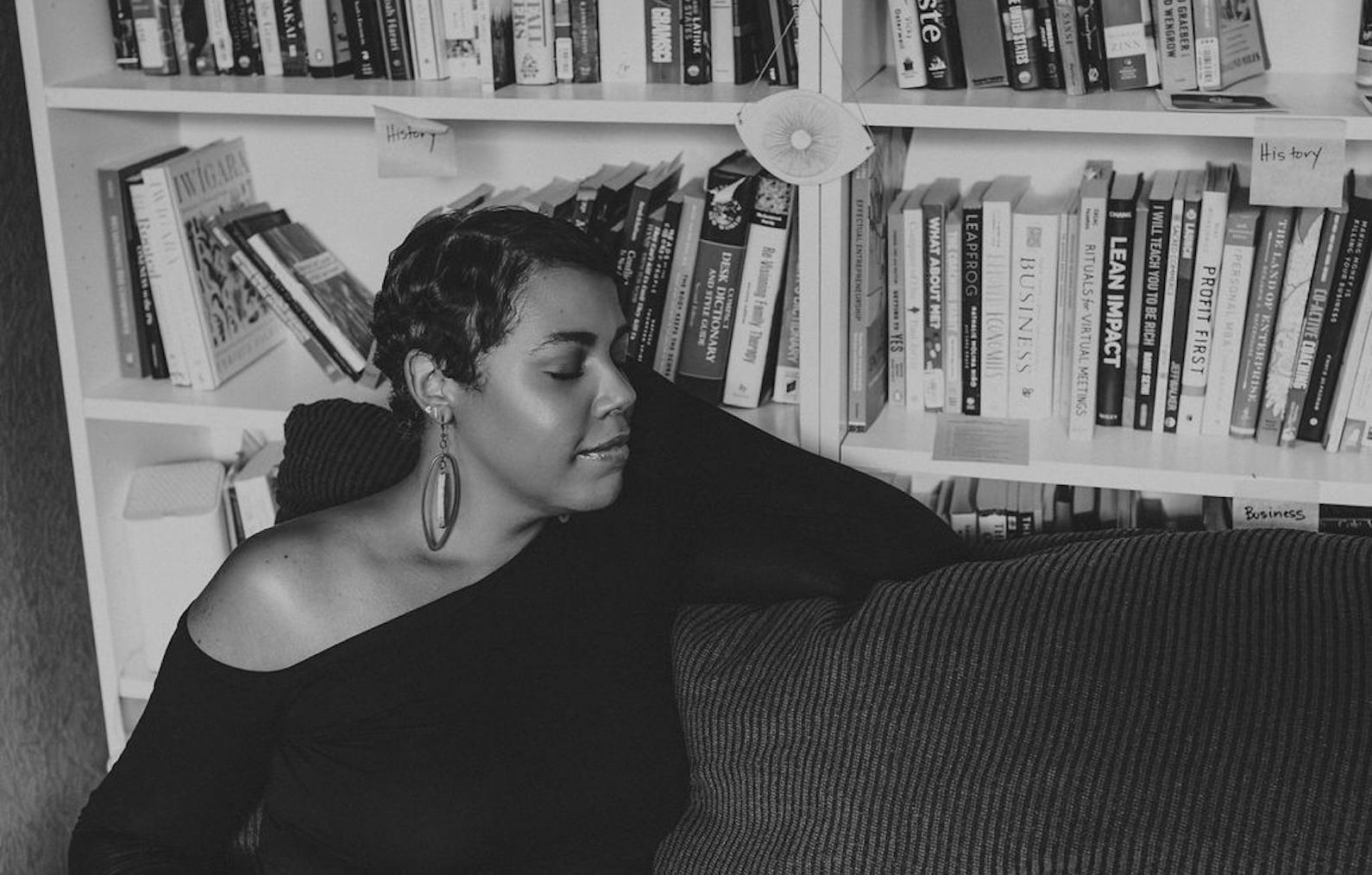
I’m a very ritualized person. I like routine, consistency, and being able to witness growth through being in relationship with something over time. My daily practices are less about perfection and more about steady devotion. Reading is one of my most important daily rituals. I aim to read at least ten pages a day. I find so much joy in sitting with ideas, letting them shape me, and deepening my understanding of the world.
In my 40s, staying connected to my body feels essential - this might look like taking a walk, stretching, strength training, or spending a few minutes on my vibration plate. It’s less about intensity and more about maintaining a relationship with my body and honoring its changes over time. That connection also includes tending to my sensual and erotic self. Staying connected to pleasure, aliveness, and embodiment in ways that are often overlooked in conversations about daily practice. And then there are the quieter rituals like staying hydrated, slowing down, and creating small moments of care throughout the day. These may seem simple, but I see them as foundational practices that support how I show up in my life and in my work.
What keeps you going, inspires you on a daily basis?
People keep me going.
I’m deeply inspired by the people I’m in relationship with through my work, those who join my programs, those who read my writing, and those who help make my nonprofit supporting Black single mothers possible. There’s something powerful about witnessing people wrestling with the world, asking hard questions, and trying to live differently. That keeps me grounded in the importance of this work.
I’m also inspired by young people — especially my teenagers. They keep me young, but they also keep me honest. There’s something about watching younger generations look at this world and say, what the fuck is going on? and then begin imagining something different. That kind of clarity and refusal gives me hope.
And I find inspiration in everyday community, being embedded in relationships with people who are questioning things, thinking deeply, and also just living their lives. People who are caring for one another, finding joy, navigating struggle, and continuing to show up.
What do you keep on your bedside table or on your altar?
Next to my bed, I keep a few small things that help me wind down and tend to myself at the end of the day. I have a small beeswax candle that I light every night before bed. It’s a quiet ritual that helps me slow down and transition into rest. Sleep has been something I’ve had to be intentional about, so I also keep sleep support nearby — usually an herbal sleep spray or something gentle that helps signal to my body that it’s time to rest. I also keep hand lotion and foot lotion. I like to go to bed moisturized…it’s a small act of care that helps me feel grounded and tended to.
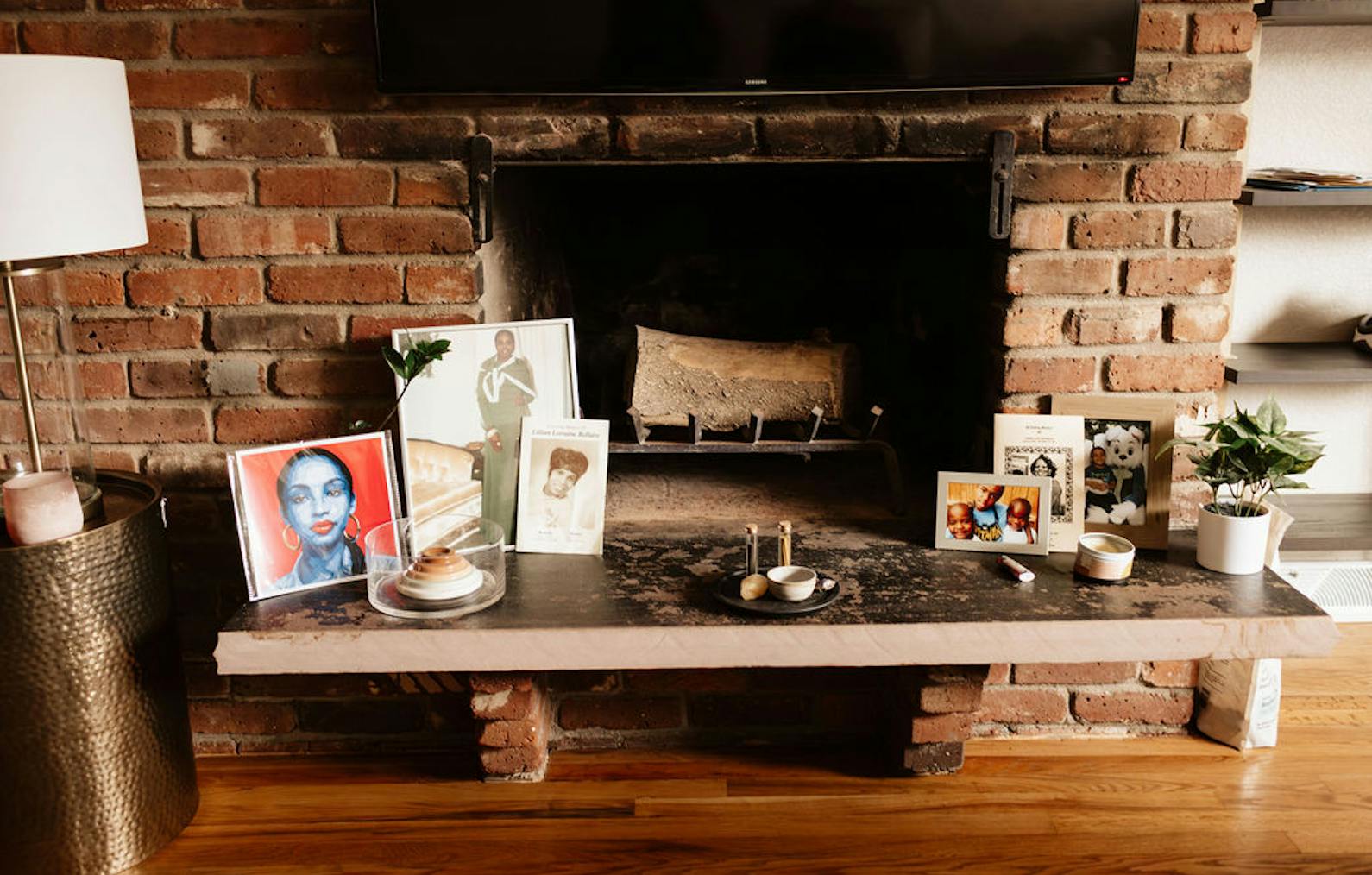
I also keep a couple of altars in my home. On them, I have photos of beloveds, incense, stones, and objects that help me feel connected to people I love, to memory, and to something beyond the day-to-day. My altars aren’t overly structured. They’re more intuitive and evolving, filled with things that help me feel connected to other worlds and to something deeper than myself.
What is the best advice you've ever gotten?
I feel really lucky to be surrounded by deeply thoughtful, considered, and profound women. I’m constantly being poured into, and we pour into each other. So in many ways, I feel like I’m always receiving meaningful advice.
But one piece that has stayed with me is the practice of slowing down — especially when I’m triggered or emotionally activated. I was encouraged to give myself grace, to not react immediately, and to sit with my feelings before making decisions.
That advice changed me.
It helped me understand that my initial emotional response isn’t always the full truth of how I feel. Sometimes it’s protective, sometimes it’s rooted in old wounds, and sometimes it just needs space to breathe. I’ve learned to allow myself to feel fully, to be angry, hurt, overwhelmed, without immediately making concrete decisions from those feelings. For me, that has become a mark of healing: giving myself the breath between feeling and acting. Sleeping on things. Letting the intensity soften. Allowing myself to be connected to the expansiveness of my emotions rather than being ruled by them.
That practice has been deeply therapeutic. It’s helped me show up with more care, more clarity, and more love…both for myself and for others.
What words of wisdom do you always find yourself sharing?
One piece of wisdom I find myself returning to again and again is this idea of tending to our 500 square feet. I first encountered this through Betty Reid Soskin, who was the oldest serving National Park Service ranger in the United States at the age of 100. I read her words years ago in a Teen Vogue interview, and they stayed with me. She spoke about how she doesn’t try to change the entire world…she tends to her 500 square feet.
That idea grounded me immediately. We’re living in a time where everything feels urgent, overwhelming, and constantly shifting. The 24-hour news cycle, social media, global crises, it can leave us frozen, feeling like we’re supposed to care about everything and fix everything all at once.
But this idea reminds me that I have my 500 square feet. My relationships. My body. My work. My beliefs. The people connected to my life and my community.
And you have yours.
There’s something deeply relieving about that. It pulls us out of shame and overwhelm and brings us back into responsibility and care. I often share this because it gives people permission to focus on what is actually within their reach. To move with intention instead of panic, to act with care instead of urgency. And when each of us tends to our 500 square feet, collectively, that’s how the tides begin to shift.
What are three books you recommend for someone looking to go deeper into this kind of study?
There are a few books I return to again and again, books I’ve read multiple times that continue to shape how I think, live, and understand the world.They continue to meet me at different moments in my life, and each time, they help me go deeper.
One is Conversations with God by Neale Donald Walsch. This book opened me up spiritually and helped me think differently about life, purpose, and my relationship to the world. It’s one of those books that invites you into deeper reflection and inner listening.
Another is Revolutionary Mothering edited by Alexis Pauline Gumbs, China Martens, and Mai’a Williams. This book reshaped how I think about motherhood, not just as a personal role, but as something deeply political, relational, and transformative.
I also often recommend All About Love by bell hooks. This book challenged and expanded my understanding of love, moving beyond romance and into love as a practice, an ethic, and a way of living in the world.
And I have to add a fourth: Beyond the Periphery of the Skin by Silvia Federici. This book stayed with me in a profound way. It explores embodiment, connection, and how capitalism shapes our relationship to our bodies and one another.
Photos by Danielle Cohen